
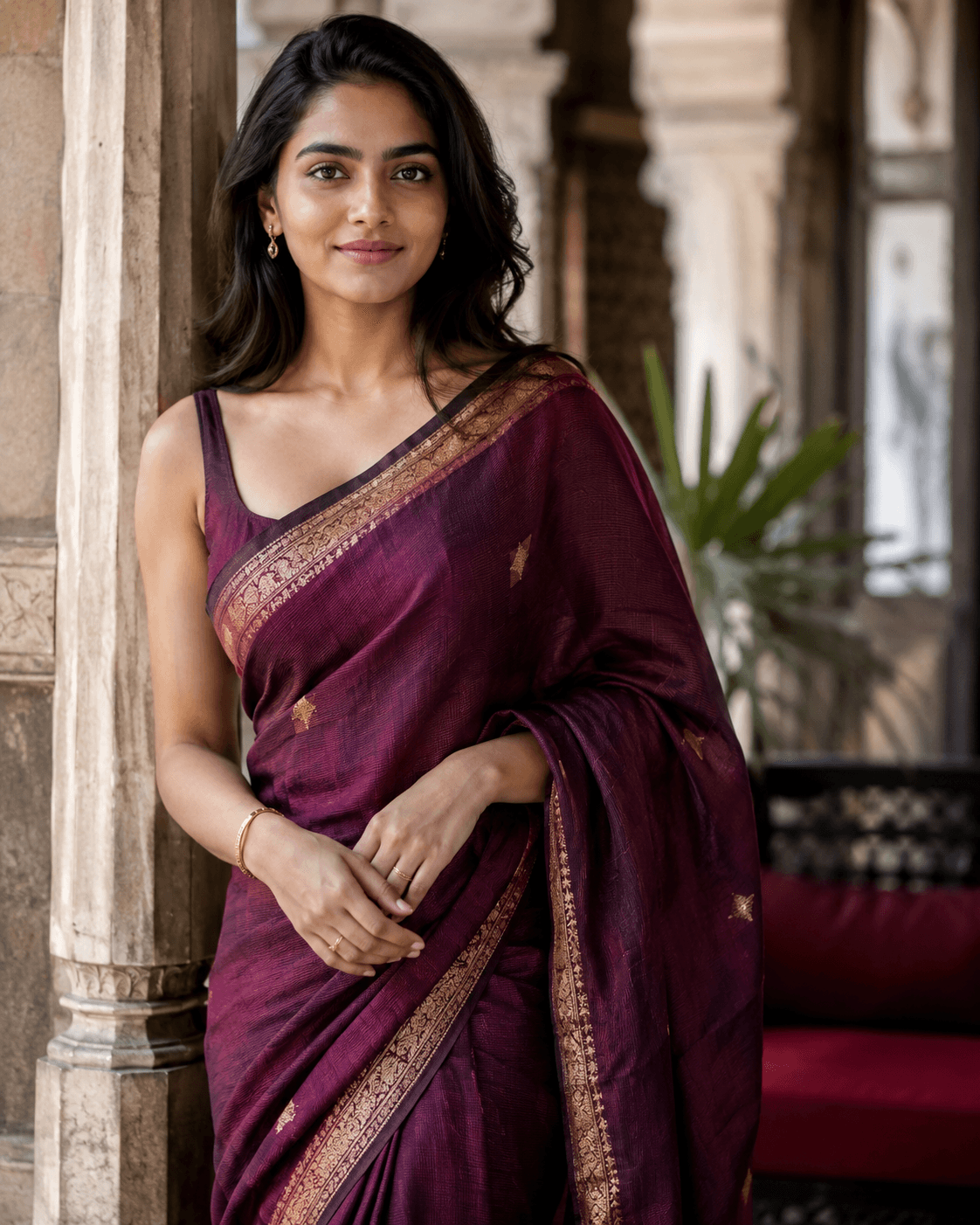
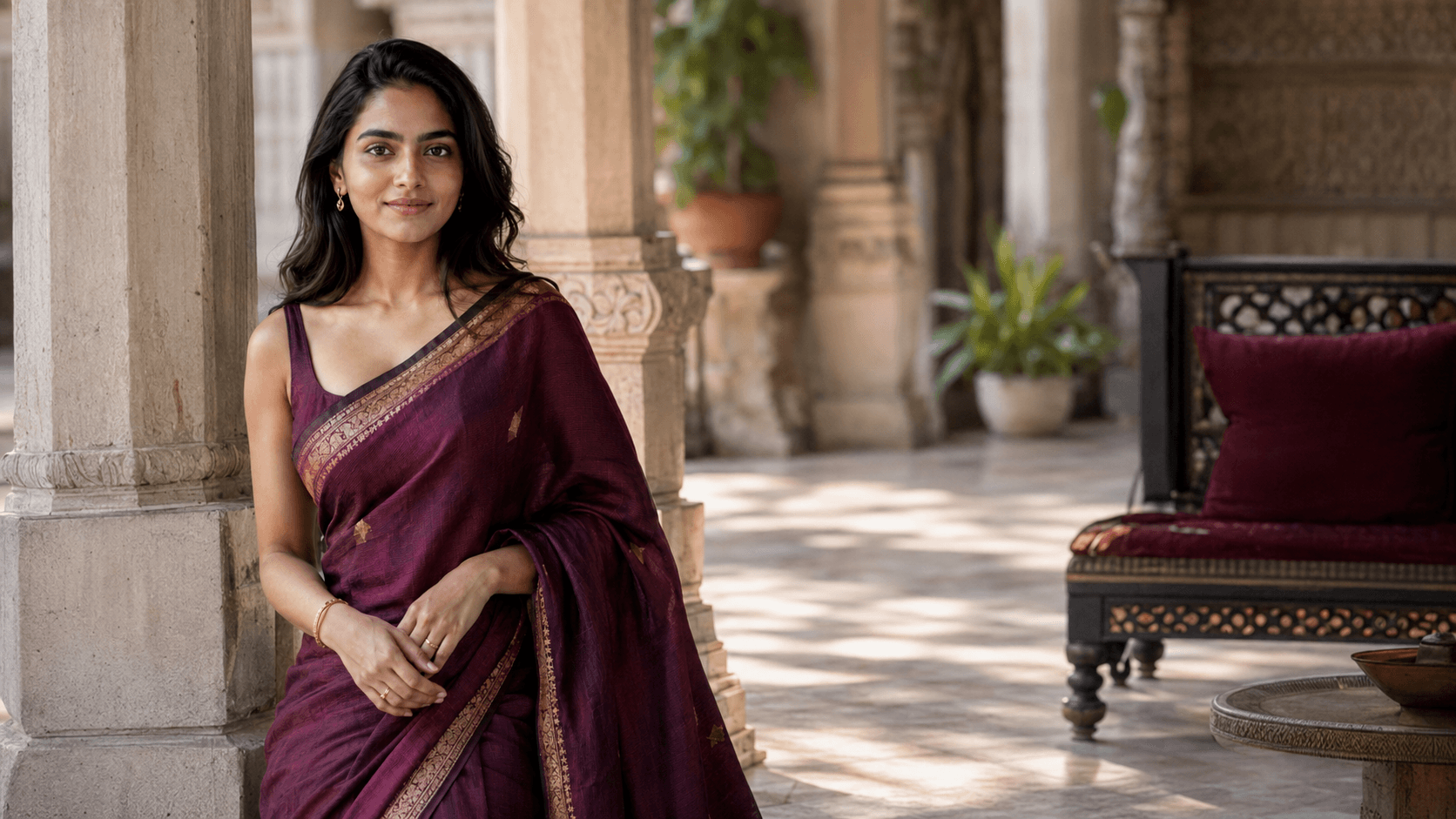
Quiet luxury has become one of fashion’s most repeated phrases. It is often reduced to beige clothing, discreet handbags, immaculate tailoring and the absence of visible logos.
But for India, understated elegance does not need to mean dressing without colour, ornament or cultural memory. Our own language of restraint is richer than a uniform of imported minimalism.
Quiet luxury can exist in the weight of handwoven fabric, the fall of a beautifully cut kurta, the precision of a blouse, the softness of an old silk saree and the confidence to wear one exceptional piece without surrounding it with noise.
Luxury Is Not the Absence of Identity
Much of the global quiet-luxury aesthetic celebrates invisibility: neutral tones, restrained silhouettes and objects recognisable only to those who know their price.
India does not need to erase its visual language to appear refined. A deep vermilion, a muted gold border, an inherited textile or a sculptural piece of jewellery can feel more sophisticated than an outfit designed only to disappear.
The question is not whether a garment attracts attention. The question is whether every element has been chosen with intention.
“Understatement is not about becoming invisible. It is about removing everything that competes with your presence.”
Fabric Before Fame
True refinement begins closer to the skin than the label. It is experienced in texture, breathability, movement and the way a garment holds its form throughout the day.
A beautifully made cotton shirt, linen saree, wool jacket or silk kurta can become more luxurious with time because its value does not depend entirely on recognition.
The wearer notices the difference first: in comfort, proportion, finish and the quiet assurance of something made properly.
Fit Is the Most Personal Form of Luxury
A garment does not become elegant simply because it is expensive. Its shoulder must sit correctly. Its length must understand the wearer. Its volume, neckline and structure must create balance.
This is why tailoring remains one of India’s most valuable style traditions. A thoughtful alteration can transform an ordinary piece, while poor fit can diminish even the most celebrated design.