
India, Through Her Eyes

The VÉYA Wellness Edit

Why Rest Is Becoming the New Status Symbol

After years of celebrating exhaustion, a quieter kind of success is emerging—one measured by sleep, boundaries, privacy and the freedom to own your time.

By VÉYA EditorialJuly 12, 202610 Minute Read
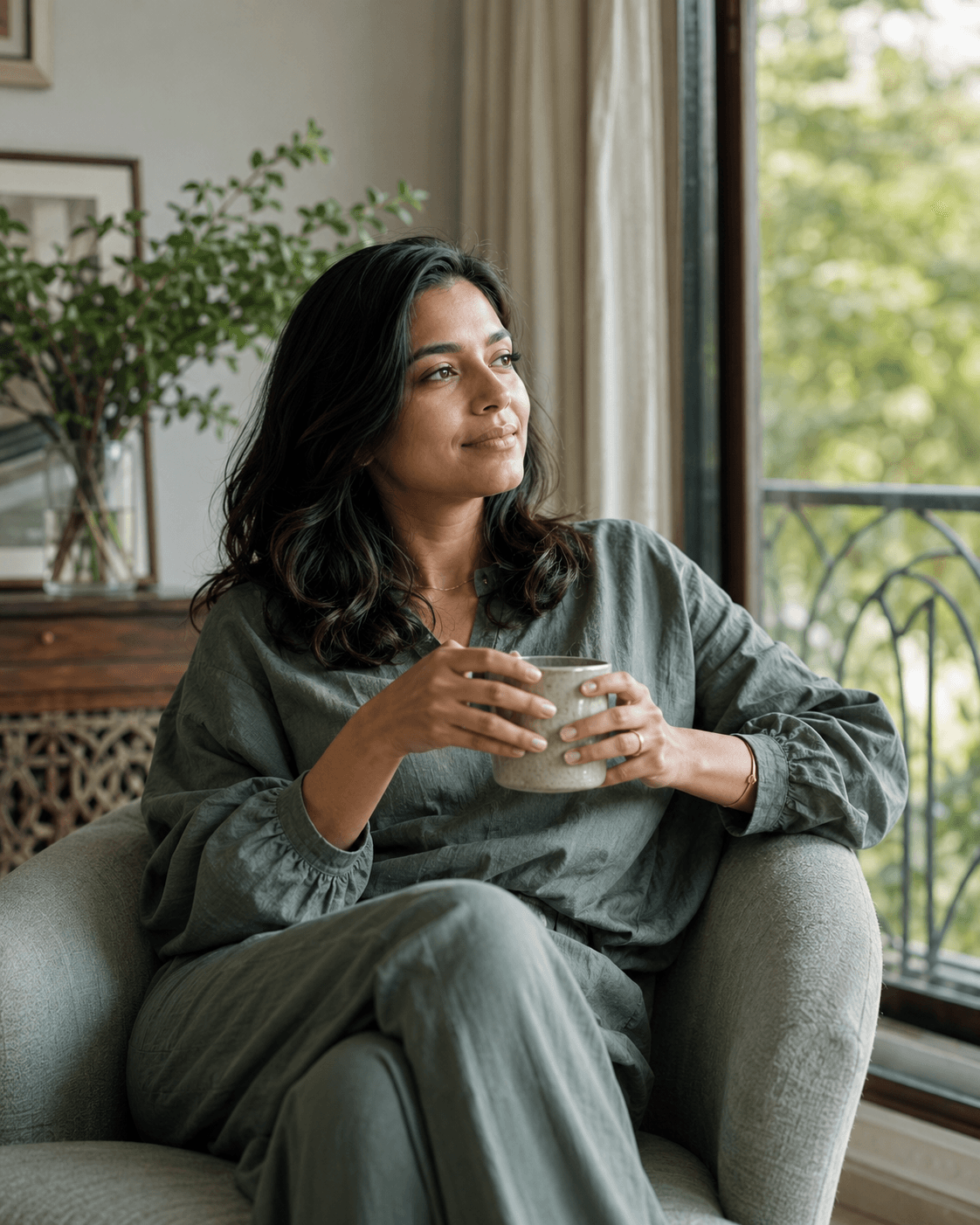
An Indian woman enjoying a quiet morning beside an open window with a warm drink

For a long time, busyness was worn like evidence. A crowded calendar suggested importance. Delayed replies implied demand. Exhaustion became a public sign that a life was serious, ambitious and full.

Rest was treated as the reward waiting at the end of achievement, although the end rarely arrived. There was always another message, task, target, obligation or person requiring attention.

Now a different idea of success is beginning to appear. The woman who sleeps well, protects her mornings, limits unnecessary access and does not perform exhaustion may possess something increasingly rare: control over her own time.

When Busyness Became Proof of Worth

Modern work made productivity visible. Emails could be answered at midnight. Calls followed people home. Social media transformed even leisure into content that had to be documented, improved and shared.

For women, the expectation was often multiplied. Professional ambition existed beside caregiving, household management, emotional responsibility and the pressure to remain socially available.

Constant activity could look like capability while quietly removing the space required for reflection, creativity and recovery.

“A full life and an overfilled life are not the same thing.”

Rest Is Becoming a Form of Private Wealth

Luxury has traditionally been associated with visible possessions. But many of the most desirable experiences now involve what is absent: interruption, noise, urgency, surveillance and the expectation of immediate response.

A quiet room, an uninterrupted afternoon or a full night of sleep may carry greater value than another object added to an already crowded life.

Rest becomes luxurious when it includes choice—the ability to step away without fear that everything will collapse in your absence.

Sleep Without Negotiation

Sleep is often the first thing exchanged for productivity and the last thing restored. It is shortened for work, caregiving, entertainment and the illusion that one more hour will finally make tomorrow easier.

Treating sleep seriously is not laziness. It is recognition that attention, mood, judgement and physical comfort are influenced by whether the body has been allowed to recover.

Rest Is More Than Sleep

A person can sleep and still feel depleted. Rest may also require freedom from decision-making, emotional performance, digital stimulation and environments that keep the mind permanently alert.

Sometimes recovery is physical. Sometimes it is social: an evening without conversation or the obligation to appear cheerful. Sometimes it is mental: time in which nothing needs to be solved.

The VÉYA Rest Audit

What is making recovery difficult?

Access

Who expects constant access to your attention, time or emotional energy?

Noise

What continues entering your mind after the working day has ended?

Responsibility

Which responsibilities are truly yours, and which have simply become attached to you?

Permission

Do you believe rest must be earned before it is allowed?

Digital Silence as Modern Luxury

The phone has made almost everyone reachable almost everywhere. Convenience slowly became expectation, and expectation became a nervous habit of checking.

Digital silence does not require abandoning technology. It can begin with small areas of life protected from constant entry: the first thirty minutes of the morning, meals without notifications or an evening in which messages are allowed to wait.

Privacy is becoming luxurious because uninterrupted attention is becoming rare.

The Boundary Before the Breakdown

Boundaries are often introduced only after exhaustion has become impossible to ignore. But a boundary is most useful before the crisis—when it quietly prevents one.

It may be a fixed time after which work communication waits. It may be declining an invitation without constructing an acceptable excuse. It may be asking another person to carry responsibility rather than automatically absorbing it.

Protect

Your Quiet Hours

Reserve part of the day from unnecessary requests, scrolling and immediate replies.

Remove

False Urgency

Not every request deserves the speed, anxiety or importance it has been given.

Restore

Unstructured Time

Leave some time without a task, achievement target or public purpose.

Rest Is Not Equally Available

Conversations about rest can become unrealistic when they ignore money, caregiving, health, housing and the unequal distribution of domestic work.

For many women, rest cannot be created through better scheduling alone. It requires practical support, shared responsibility, safer workplaces and families willing to recognise that one person’s recovery cannot depend on another woman’s exhaustion.

When Rest Becomes Another Performance

Wellness culture can turn rest into another achievement: the perfect night routine, the carefully photographed retreat or the expensive object presented as essential to calm.

Real rest may be visually unimpressive. It can be an early bedtime, a cancelled plan, a slow meal, an ordinary afternoon or the decision to stop improving yourself for a few hours.

Rest loses its purpose when it becomes another standard against which a woman must judge herself.

A Life That Requires Less Recovery

The deepest form of rest may not be a temporary escape. It may be redesigning life so that exhaustion is no longer the normal price of participation.

That can mean fewer commitments, more realistic expectations, shared labour, financial planning, protected sleep and relationships in which care moves in more than one direction.

The new status symbol is not appearing endlessly occupied. It is having enough authority over your life to become unavailable.

Wellness Note

Persistent insomnia, severe fatigue, breathing problems during sleep or exhaustion affecting daily life deserve professional medical guidance. Rest practices are supportive, but they are not a substitute for appropriate healthcare.

The VÉYA Letter

Make Space for What Restores You

Receive VÉYA’s refined weekly edit of beauty, wellness, style, culture and women shaping India.

By subscribing, you agree to receive The VÉYA Letter and acknowledge our Privacy Policy. Unsubscribe.